Community apps
Public projects, each one started as a paragraph. Open, star, or remix into your own builder.
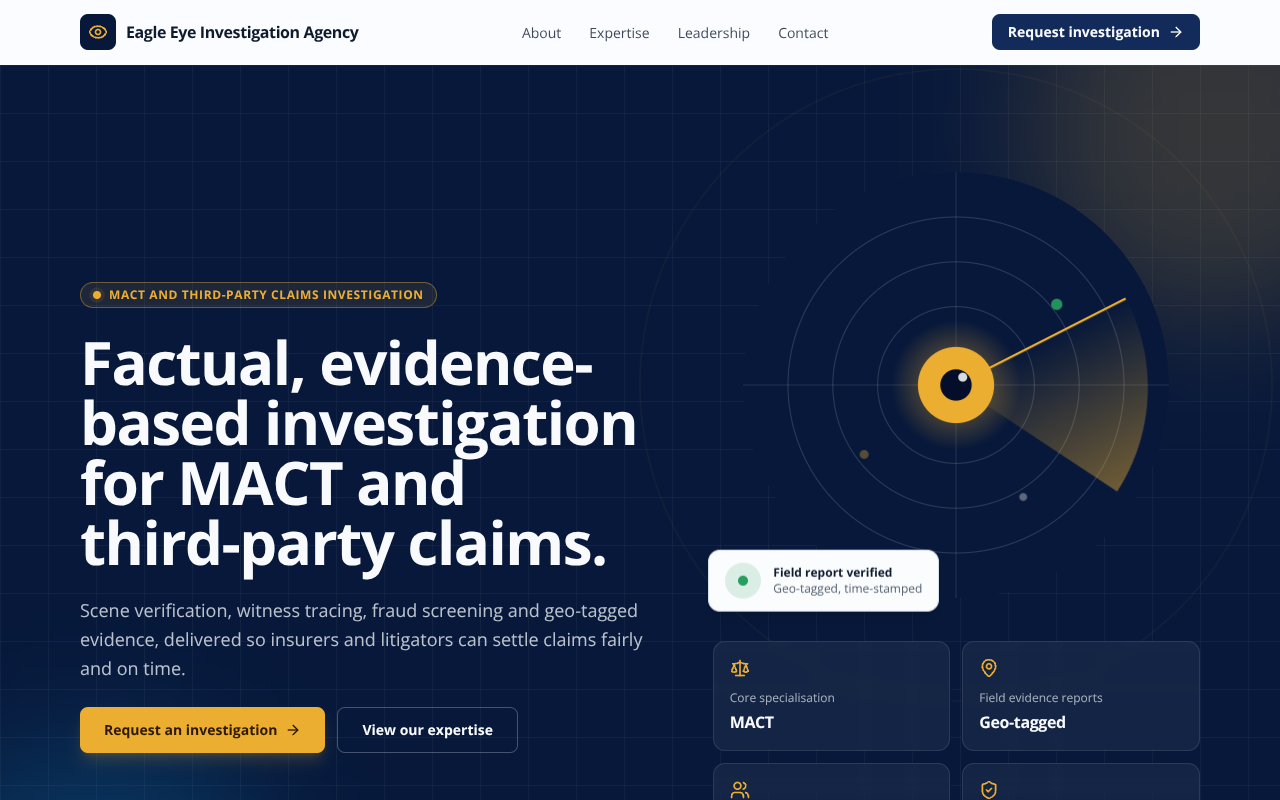 Eagle Eye Investigation AgencyMSManjot Singh
Eagle Eye Investigation Agency Company Profile: Eagle Eye Investigation Agency 1. Company Overview Eagle Eye Investigation Agency is a premier investigation and claims support firm specializing in Motor Accident Claims Tribunal (MACT) and third-party claims. Our multidisciplinary team includes legal experts, insurance professionals, retired judicial officers, and seasoned field investigators who bring decades of collective experience in claim verification, fraud prevention, and litigation support. 2. Vision & Mission Vision: To be India’s most trusted name in MACT and third-party claims investigation, setting benchmarks in integrity, efficiency, and factual accuracy. Mission: To provide comprehensive, evidence-based investigation and reporting solutions that empower insurers and litigators in fair and timely settlements. 3. Core Areas of Expertise MACT Claim Investigations – Scene verification, witness tracing, record retrieval. Third-Party Liability Assessment – Ownership, driver verification, and negligence analysis. Fraud Detection & Prevention – Pattern analysis, background checks, and suspicious claim identification. Legal Assistance – FIR, post-mortem, and medico-legal documentation support. Field Investigation & Evidence Compilation – Geo-tagged reports, witness statements, photo evidence. Claim Analytics – Statistical insights on trends and loss ratios. 4. Leadership & Key Team Members Name S.S. Yadav Designation Chairman – Advisory Board Sr. Advocate Background 25+ years in Insurance & Legal Investigations High Corut M.P./C.G. Judicial Review, Legal Oversight Head Office : LM 09, Mansarovar Complex, Opposite Rani Kamlapati Railway Station, Shivaji Nagar, Bhopal – 462011, Mob. 8349710335, Email: eagleeye.ia09@gmail.com Specialization Manish Chouhan Adv. Shruti Yadav Adv. Rama Vishawkarma Adv. Ashutosh Sharma Mr. Ujjawal Agarwal Mr. Kamal Singh Rajput Somya Dharwa Mr. Patta V. Raman Mrs. Chhaya Kol Dr. Akshay Mahajan Mr. Dinesh Yadav Senior Legal Consultant and Sr. Investigator Legal Consultant Legal Consultant Legal Consultant Adv. Supreme Court Inspector M.P. Police (MP & CG) Sr. Adv. High Court and Supreme Court Senior Analyst Ex. Add. District Judge MP Judicial Service Orthopedic Surgeon 25+ years in Insurance & Legal Investigations 10+ years in Insurance & Legal Investigations 05+ years in Insurance & Legal Investigations District court Ex-LIC Investigator Ex-Police Officer 15+ years in MACT Litigation Former Claims Officer, Oriental Insurance MBA, Insurance Law Specialist 10+ years of experience in diagnosis and recovery of musculoskeletal system 20+ years of experience as a Digital Transformation Leader with strong expertise in IT Infrastructure Medical assessment on the impact of the accident Director – Cybersecurity & Digital Leadership Cybersecurity, Digital Evidence Analysis, and Technology-led Investigation Support Judicial Process, Evidence Assessment Motor Claim Verification, Fraud Control MACT & Civil Litigation MACT & Civil Litigation On-Ground Claim Assessment Accident Scene Investigation Legal Coordination & Representation Claim Review & Analytics Policy, Ethics & Training 5. Clients & Engagements Eagle Eye Investigation Agency has provided services to leading insurance companies such as along with multiple Banks, NHAI, law firms and TPAs. The company has also collaborated with transport authorities for road accident data verification and independent claim analysis projects. 6. Workflow & Methodology 1. Case Intake & Preliminary Review – Collection of FIR, policy, and claimant details. 2. Field Verification – Site visit, witness inquiry, vehicle inspection. 3. Evidence & Record Retrieval – MLC, police report, DL & RC check. 4. Analysis & Report Drafting – Liability assessment, fraud detection. 5. Client Reporting – Structured, photo-supported report within 7–15 days. Head Office : LM 09, Mansarovar Complex, Opposite Rani Kamlapati Railway Station, Shivaji Nagar, Bhopal – 462011, Mob. 8349710335, Email: eagleeye.ia09@gmail.com 7. Infrastructure & Presence Head Office: LM-09, Mansarover Complex, Opposite Rani Kamalapati Railway Station Shivaji Nagar, Bhopal-462011 Mob. 8349710335 Field Network: 50+ trained investigators across state Technology Tools: GPS-tagged reporting system, digital dashboards, secure client portal 8. Compliance & Ethics Eagle Eye Investigation Agency is registered under the Companies Act, 2013 and adheres strictly to IRDAI and legal confidentiality norms. All investigations are conducted ethically, maintaining transparency and zero tolerance for data fabrication. Head Office : LM 09, Mansarovar Complex, Opposite Rani Kamlapati Railway Station, Shivaji Nagar, Bhopal – 462011, Mob. 8349710335, Email: eagleeye.ia09@gmail.com make a website for them
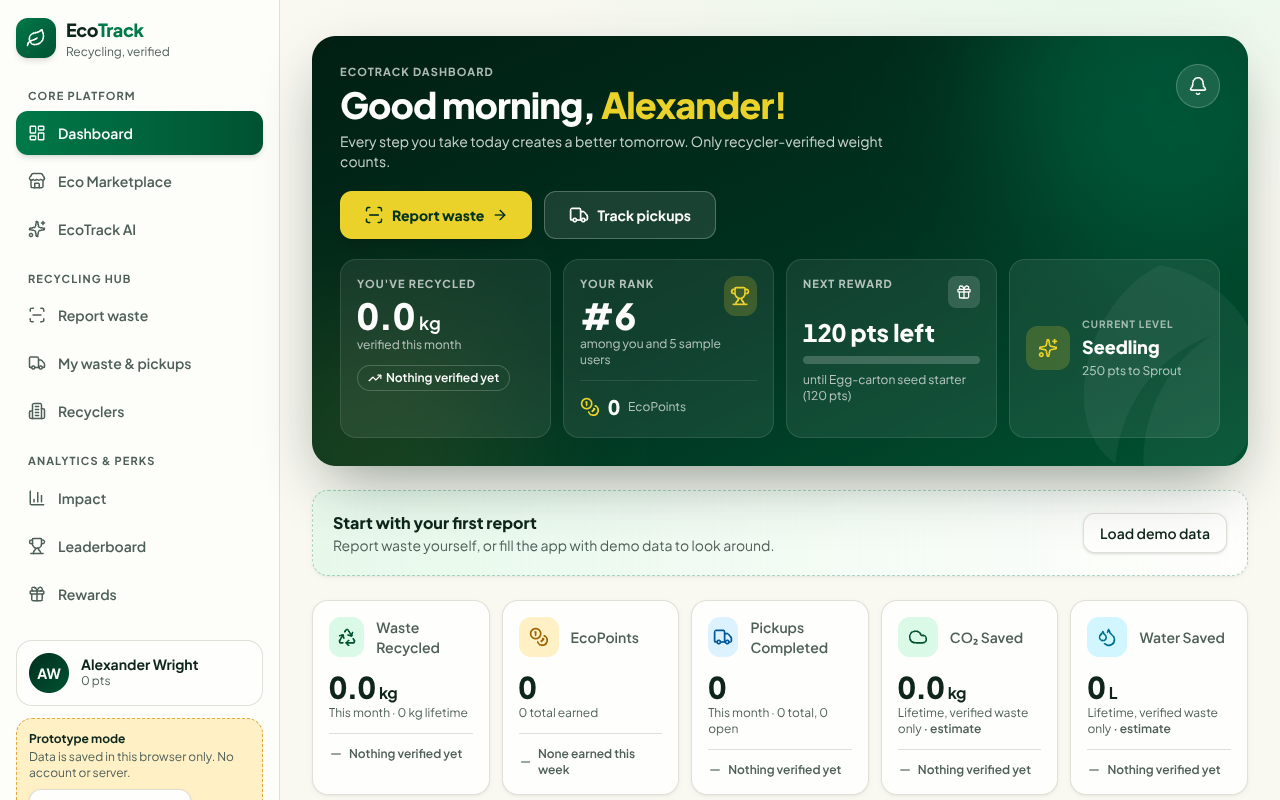 # EcoTrack — Visual Reference Analysis and Buildathon ImplemJKJashanpreet kaur
# EcoTrack — Visual Reference Analysis and Buildathon Implementation ## Project Background We previously built a project called EcoTrack for Build for Good 2026. We now want to use this project as the foundation for our company buildathon. Existing prototype: https://ecotrackk-55ib.onrender.com/dashboard The deployed website may not be accessible from your environment, and the current repository may contain only a starter shell. I will provide screenshots and images from our previous EcoTrack project to help you understand its original design, features, and user experience. ## Your First Task: Analyse the Uploaded Images Carefully inspect every screenshot I provide. For each image, identify: - Which page or section it represents. - The visible features, buttons, navigation items, cards, tables, and charts. - The purpose of that page in the overall application. - The visual design, colours, typography, spacing, and layout. - Any apparent user interactions or workflows. - Opportunities to improve usability, functionality, and accessibility. Treat the screenshots as visual references, not proof that every displayed feature was fully functional. Do not invent functionality that cannot be established from the screenshots or project description. Clearly distinguish visible evidence from assumptions. ## EcoTrack Project Concept EcoTrack is a recyclable waste management platform designed to connect individuals, households, businesses, and recycling partners. Its main purpose is to help people: 1. Report recyclable waste. 2. Identify or categorise different types of waste. 3. Find suitable recycling partners. 4. Schedule and track waste pickups. 5. Monitor recycling progress and environmental impact. 6. Participate in sustainability initiatives through meaningful rewards. The previous project also explored dashboards, rewards, points, leaderboards, and community impact. ## Your Second Task: Build the Improved Application After analysing the screenshots, combine the visual references with the project concept to create a cohesive, improved EcoTrack application. Prioritise a complete, functional user journey: Report waste → Identify waste → Match with a recycler → Request pickup → Track pickup → View verified impact. ### Design requirements - Preserve recognisable elements of the original EcoTrack design where useful. - Improve the interface rather than copying every design decision blindly. - Use a clean, modern, sustainability-focused visual identity. - Ensure consistent navigation, typography, spacing, colours, and components. - Make the application responsive on mobile, tablet, and desktop. - Avoid cluttered dashboards, meaningless statistics, and unnecessary decorative elements. - Give every visible interactive element meaningful behaviour. ### Functional requirements - Implement working forms and waste reports. - Provide realistic recycler matching based on available data. - Support pickup requests and clear status transitions. - Track collected waste separately from reported waste. - Make environmental calculations transparent and label estimates appropriately. - Integrate genuine AI functionality where supported by available services and credentials. - Clearly label demo data and unavailable integrations. ## Important Implementation Rules 1. Analyse all uploaded screenshots before making major implementation decisions. 2. Do not claim to have accessed the deployed website if you could not access it. 3. Do not claim to have inspected or reused unavailable original source code. 4. Inspect the current repository and use its existing framework and tooling where practical. 5. Do not discard useful existing code or unnecessarily rebuild configured infrastructure. 6. Build the actual application if your environment supports code changes; do not stop at a design description. 7. Test the main user journeys and explain any limitations honestly. ## Expected First Response After reviewing the images, provide: - A concise summary of the original EcoTrack design and features you can observe. - A list of pages and workflows inferred from the references. - The main improvements you recommend. - A prioritised implementation plan. Then proceed with implementation, unless essential information is missing. Our goal is to evolve the original EcoTrack concept into a professional, useful, functional, and impressive company buildathon project—not merely produce a collection of attractive screens.
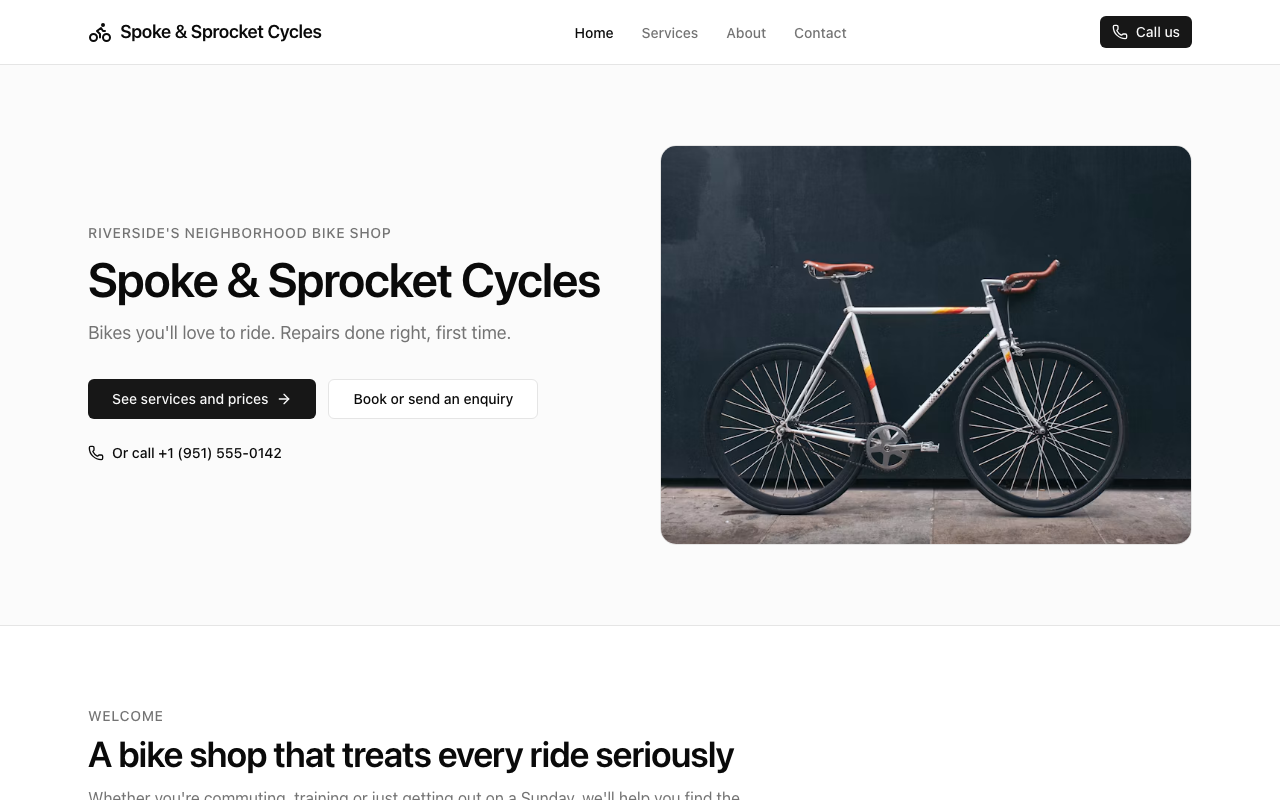 small website for my cycles businessTMTemo Mail
small website for my cycles business
- Create TeamPulse, an AI-powered project and team management PLPriyanka Lodha
Create TeamPulse, an AI-powered project and team management assistant for project managers and project leads. Theme: Productivity at Work — AI for Everyday Problems. Problem: Project managers spend too much time chasing daily employee updates, tracking tasks across projects, preparing reports, and identifying delays. Target users: Project managers, project leads, and small IT teams. Build a polished, responsive web application with these core features: 1. Dashboard showing total projects, team members, completed tasks, pending tasks, overdue tasks, and blocked tasks. 2. Project tracking with project names, deadlines, assigned employees, status, and progress. 3. Team workload tracking showing each employee's assigned tasks and current workload. 4. Daily stand-up updates where team members record completed work, next steps, and blockers. 5. Project Risk Radar that identifies overdue tasks, blocked work, and upcoming deadlines. 6. Daily management summary that consolidates actual task progress, key blockers, and recommended actions. 7. Searchable task list with the ability to add tasks, edit tasks, and update their status. 8. A professional, modern SaaS dashboard design with clear charts, readable tables, and a left navigation sidebar. Use realistic sample data for 3 projects, 8 team members, and 15 tasks so I can demonstrate the application immediately. Prioritize working interactions over a large number of features. Make sure buttons and navigation work, dashboard figures update when task data changes, and the app clearly distinguishes sample data from real submitted updates. I am a non-technical project manager building this for an internal Buildathon. Explain any setup steps in simple language. Do not require API keys or external integrations for the initial prototype. Build the application and show me the preview.
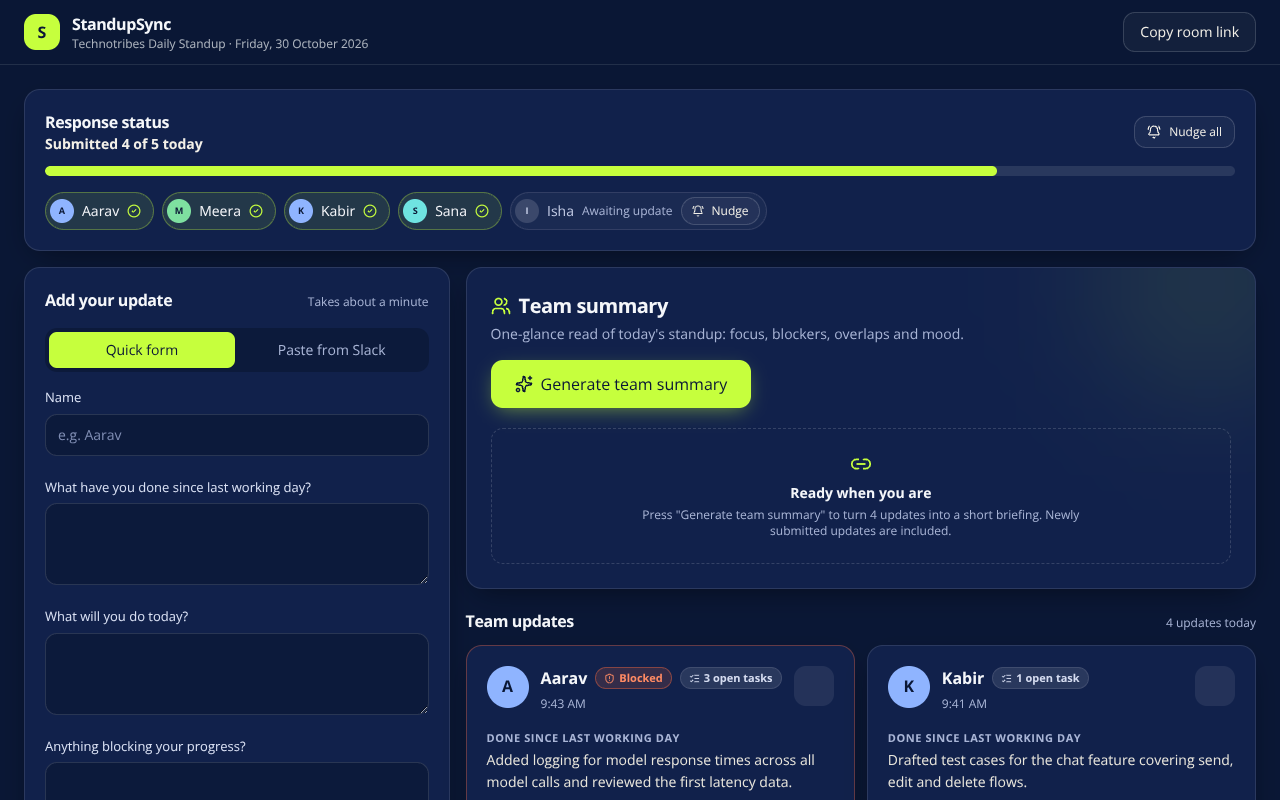
Build a polished single-page web app called "StandupSync", a shared AI standup room for software teams. The design is modern and professional: dark navy background (#0A1735), lime-green accent (#C6FF3D), off-white text, rounded cards, subtle shadows, clean sans-serif typography, fully responsive. LAYOUT - Top bar: logo "StandupSync", room name "Technotribes Daily Standup", today's date, and a "Copy room link" button. - Left column (about 35%): "Add your update" panel. - Right column (about 65%): "Team updates" feed and, above it, a "Team summary" panel. ADD YOUR UPDATE PANEL - Two tabs: "Quick form" and "Paste from Slack". - Quick form fields: Name, "What have you done since last working day?", "What will you do today?", "Anything blocking your progress?", and "How do you feel today?" as a 5-option emoji selector (great, good, okay, low, stressed). - Paste from Slack tab: one large textarea. When the user pastes a Technobot-style standup like: "What have you done since Thursday? ... What will you do today? ... Anything blocking your progress? ... How do you feel today? ..." a "Parse update" button automatically fills the form fields from the text. - "Submit update" button adds the update to the feed instantly with a timestamp. TEAM UPDATES FEED - One card per teammate: avatar initials, name, time, and the three sections, with the mood emoji in the corner. Cards with a blocker show a red-orange "Blocked" badge. - Pre-load 4 realistic demo teammates with today's updates and yesterday's updates stored in the data, so the demo never looks empty: 1. Aarav (Backend): logging model response times, picking one primary and two fallback models. Blocker: personal API credits expiring soon, needs a new key (this same blocker also appears in yesterday's data). Mood: good. 2. Meera (Frontend): redesigning the discuss feature UI. Blocker: waiting on API response format from Aarav. Mood: okay. 3. Kabir (QA): writing test cases for the chat feature, depends on Meera's UI. Blocker: none. Mood: great. 4. Sana (Product): preparing release notes and reviewing the model-switching feature with Aarav. Blocker: none. Mood: good. TEAM SUMMARY PANEL (the hero feature) - A prominent "Generate team summary" button with a loading animation. - Output as clear sections: 1. "Today in 3 lines": a three-sentence summary of what the team is doing. 2. "Blockers board": each blocker with who is blocked and who or what they are waiting on. If two people are connected (blocked on each other's work), draw a small arrow "Meera, waiting on Aarav". 3. "Repeated blockers": highlight in warning color any blocker that appeared in both yesterday's and today's updates, with the label "Repeated 2 days: needs attention". 4. "Overlapping work": detect teammates working on related things (for example, model switching) and suggest they sync. 5. "Team mood pulse": a horizontal bar or gauge showing the mood distribution with a one-line takeaway. - Use the AI integration for this generation if available. If it is not, use deterministic logic over the stored data and write the code so a real LLM API call can replace it later. Never show broken or empty states. - Below the summary: a "Copy for Slack" button that copies the summary as clean Slack-formatted text, and a "Copy for email" button. Show a small "Copied" toast. STATE - Keep all data in client-side state. New updates submitted by the user must appear in the feed and be included the next time the summary is generated. - Include a "Reset demo" button. POLISH - Smooth transitions, hover states, skeleton loader while generating, friendly empty states, accessible contrast, clear focus states. - A small footer: "Built at the Buildify Buildathon". IMPORTANT: Do not rebuild from scratch. Keep the existing StandupSync app exactly as it is, with all current features, layout, design, demo data, Slack paste parser, summary panel and copy buttons, working as before. Extend it with the following. NAVIGATION - Add a top-level tab bar under the header: "Standup" (the existing page, unchanged), "Tasks", and "Accountability". Keep the same dark navy (#0A1735) and lime (#C6FF3D) design language. SHARED DATA - Expand the demo data to 5 teammates and about 30 days of history of daily updates (weekdays only), stored in client-side state. Use fictional names. Make it varied and realistic: most people reply on most days, one teammate has noticeably patchy replies (around 60% response rate), one teammate has a blocker that stays open for several days, and some commitments from "What will you do today?" are completed the next day while others carry over. - Each update stores: person, date, done, plan, blocker, mood. - Derive "commitments" from each day's plan, and compare them with the next day's "done" text to mark each commitment Completed, Carried over, or Not mentioned. If an AI integration is available use it, otherwise use simple keyword matching over the stored text. STANDUP TAB (additions only) - Add a "Response status" strip at the top: "Submitted 3 of 5 today" with a progress bar, avatar chips for those who have replied, and greyed chips labelled "Awaiting update" for those who haven't. - Add a "Nudge" button next to each awaiting person and a "Nudge all" button. Each copies a friendly Slack-ready reminder message to the clipboard and shows a "Copied" toast. Keep the tone kind, not accusatory. TASKS TAB - A board with three columns: To do, In progress, Done. - "Assign task" button opens a modal: title, owner (dropdown of teammates), due date, priority (Low / Medium / High), optional note. - Task cards show title, owner avatar, due date, priority badge, and an "Overdue" badge if past due. Tasks can be moved between columns by buttons or drag and drop. - Commitments pulled from standup updates appear as auto-created tasks with a small "From standup" tag. - Filters: by person and by status. - Show each person's open tasks on their card in the Standup tab as a small counter. ACCOUNTABILITY TAB - A period selector at the top: This week, This month, Last 30 days, Custom range. All numbers below update with it. - Summary cards: team response rate, tasks completed, tasks carried over, blockers raised vs resolved. - A table with one row per person: response rate (with a small bar), tasks completed, tasks carried over, follow-through % (completed divided by committed), blockers raised, blockers resolved, and average blocker age. Use neutral, positive language. Do not rank people or label anyone as worst. Sort by name by default and let the user sort by any column. - A participation heatmap calendar for the selected period (rows are people, columns are days; filled, empty and weekend states). - Clicking a person's name opens a side drawer with: a timeline of their updates in the period, their completed and carried-over commitments, their open blockers with age in days, and an "AI summary of this period" paragraph. If no AI integration is available, generate the paragraph from the data with templates. - A "Copy weekly digest" button that copies a Slack-formatted team digest for the selected period: highlights, completed work, open blockers, and who is awaiting an update. BLOCKER AGING - Anywhere a blocker is shown, include "open for N days". Highlight blockers open 2 or more days in the warning color. POLISH - Smooth tab transitions, hover states, empty states, loading skeletons, responsive layout, accessible contrast. The "Reset demo" button should restore the full demo data. Make sure every new feature works with the demo data without any setup.
 an app to key in my football players dataSMSumani Mohammed
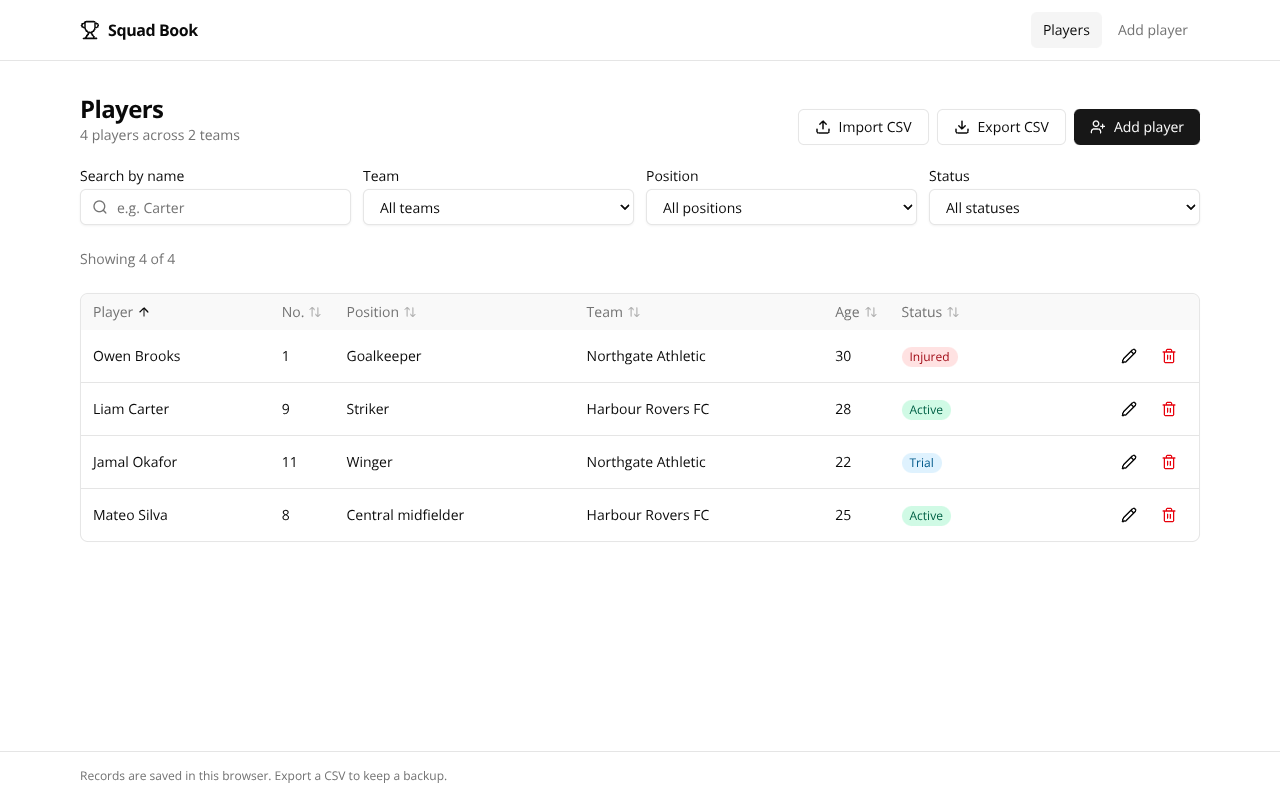
an app to key in my football players data
- Crown and TreasonASAsmi Sharma
Build a complete, single-file interactive strategy game in React using Tailwind CSS called Crown and Treason: The Living Board, inspired by the papercraft style and game theory of Nicky Case's The Evolution of Trust. Do not use placeholders, TODOs, or truncate code. Write the entire code in full. Exact Piece Personalities and Dialogues (Use this exact mapping in your code): Black Pawns on row 1: Pawn at column e (e7): The Conscript. Dialogue: "They gave me a wooden spear and left me in the mud! Spare me and I will defect to your side!" (Button: Accept Treason - turns this pawn to White on the board). Pawn at column d (d7): The Zealot. Dialogue: "I will gladly bleed for my King! No bribes, no surrender!" (Button: Clash - continue attack). Pawn at column c (c7): The Coward. Dialogue: "Please do not come closer! I will drop my weapons if you promise safe passage!" (Button: Accept Surrender - removes pawn peacefully). Pawn at column f (f7): The Royal Guard. Dialogue: "You will not touch the King while I draw breath!" (Button: Challenge Guard). Pawns at columns a, b, g, h: The Conscripts. Dialogue: "We are tired of dying for this throne! Give us a reason to switch sides!" Black Knights on row 0 at columns b and g (b8 and g8): The Mercenary. Dialogue: "Pay me 3 coins right now and I will pack up my horse and leave before our blades ever cross." (Button: Pay Bribe - costs 3 coins, removes knight peacefully). Black Bishops on row 0 at columns c and f (c8 and f8): The Inquisitor. Dialogue: "You bring cold iron against God's vicar? Repent before holy fire consumes your vanguard!" (Button: Defy Inquisitor). Black Rooks on row 0 at columns a and h (a8 and h8): The Iron Bastion. Dialogue: "Stone does not bend. Break yourself against my battlements—I do not bargain with invaders!" (Button: Siege Bastion). Black Queen on row 0 at column d (d8): The Puppetmaster. Dialogue: "A King wears the crown, but I move the court. Turn your attack to the flank, and I grant you safe passage." (Button: Accept Royal Compromise - grants 3 coins). Black King on row 0 at column e (e8): The Paranoid Monarch. Dialogue: "Treason in every corner! Guards, slay this assassin before the crown falls!" Gameplay and Interaction Rules: Captures are instant executions: when a piece moves onto an occupied enemy square, it executes them immediately. The enemy piece is deleted from the board array with zero popups or delay. Field Dialogues on empty moves: when a White piece moves to an empty square, find the closest Black piece on the board. Display that Black piece's title, avatar emoji, and exact dialogue in a speech bubble on the right side of the screen, along with its specific action buttons. If the player clicks Accept Treason on a Conscript, that pawn's team immediately changes to White on the board and fights for the player. If the player clicks Pay Bribe or Accept Compromise, add coins to the player's coin counter. Provide an Ignore and March button on every dialogue to continue normal chess play. Visual Style (Nicky Case Papercraft): Warm off-white paper canvas background with dark charcoal text. Clean white cards with bold 2-pixel dark borders and solid drop shadows. Chunky paper buttons that visually press down when clicked. Alternating cream and cardboard tiles on an 8x8 chessboard with coordinates A to H and 1 to 8. Use standard Unicode chess pieces in warm amber for White and charcoal for Black. A prominent narrative banner across the top showing the Chronicler's story updates on every turn. A victory modal with a play again button when a King is captured. Implement all standard move logic for pawns, knights, rooks, bishops, queens, and kings, with safe null checks on every cell.
 # MindMesh — Implement the AI Teammate and Visual GenerationBUBuildify user
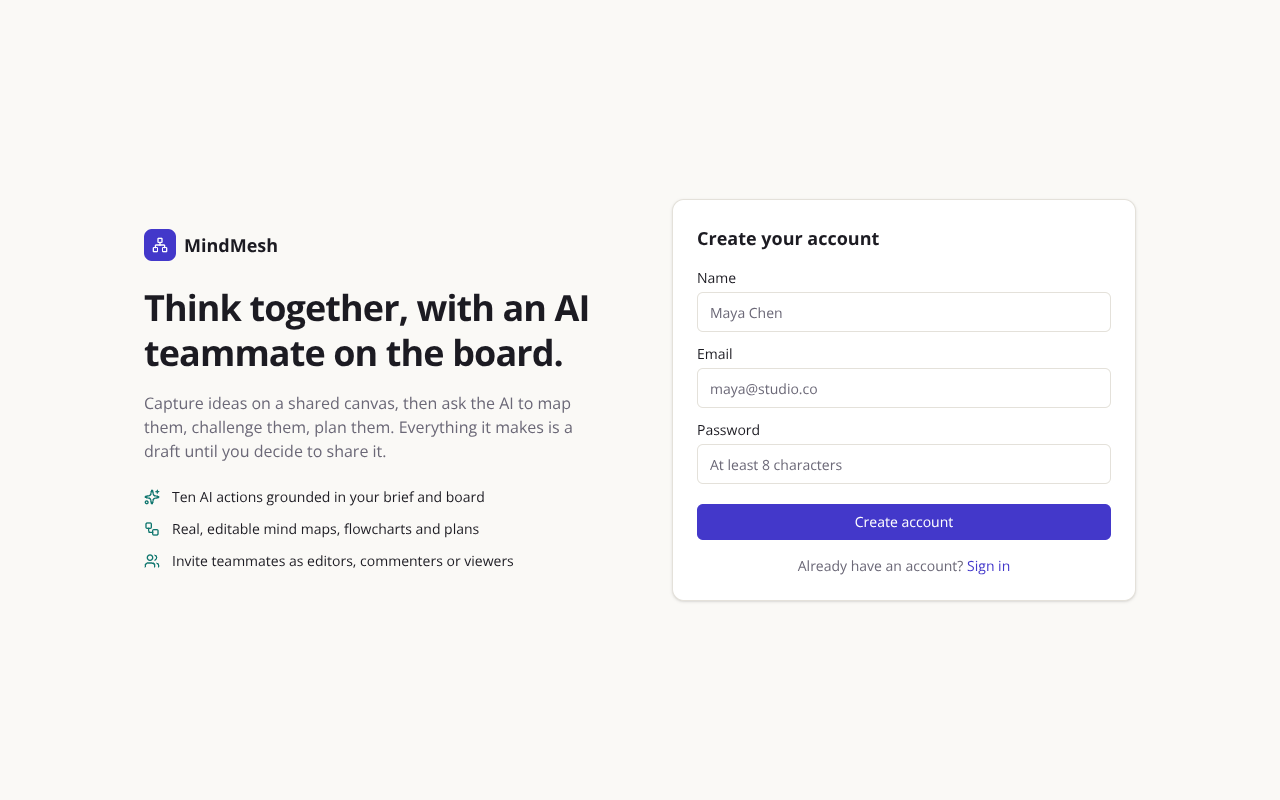
# MindMesh — Implement the AI Teammate and Visual Generation Engine Extend my existing MindMesh project. Preserve the current design and all working features. Do not rebuild the application from scratch. ## A. Create a real AI teammate Build a dedicated AI teammate powered by the Claude API through a secure server-side integration. The AI teammate must understand: - The user's current request. - The project brief. - Selected canvas items. - Relevant board content. - Previously shared AI results and decisions when needed. Provide these actions: 1. Generate new ideas. 2. Improve an existing idea. 3. Connect selected ideas. 4. Challenge assumptions and identify gaps. 5. Generate alternatives. 6. Create a mind map. 7. Create a flowchart or decision tree. 8. Create a project plan. 9. Summarise the board. 10. Convert accepted ideas into action items. Use the same secure Claude integration with different task-specific instructions and validated output schemas. ## B. Implement real mind-map generation When a user selects "Create Mind Map": 1. Ask for a topic or use selected board content. 2. Send the topic and relevant context to the Claude API. 3. Request structured data containing a central topic, hierarchical nodes, labels, parent-child relationships and optional branch colours. 4. Validate the returned data. 5. Render the data as a genuine visual mind map using editable nodes and connectors. 6. Automatically arrange the nodes so the diagram is readable. 7. Display the result as a draft with Add to Canvas, Edit and Dismiss controls. Each node must support editing its label, adding children, deleting the node and moving it. Where practical, include an "Expand this branch with AI" action that generates new children for the selected node. Preserve existing notes. Do not replace the user's board with an image of a mind map. ## C. Implement other AI-generated visuals Use structured AI outputs and appropriate renderers to create: - Flowcharts. - Decision trees. - User journeys. - Process diagrams. - Brainstorming clusters. - Project plans. - Creative moodboards. Each output should be editable and saveable. Do not display a static illustration in place of a functional diagram. ## D. Shared AI workflow Support two visibility modes: - Private draft: visible only to the requesting user. - Shared result: visible to authorised board members after the user publishes it. Published AI results should be stored in the shared database, linked to their source request and associated with the user who generated them. Collaborators should be able to comment on, edit and build on shared results according to their permissions. Keep AI drafts separate from approved decisions. Never silently overwrite board items or automatically publish private content. ## E. Context-aware AI actions When one or more items are selected, the AI panel must offer actions relevant to those items. Examples: - Select two notes → Connect Ideas. - Select a topic note → Generate Mind Map. - Select a branch → Expand Branch. - Select a workflow → Generate Flowchart. - Select the board → Summarise Board. - Select approved ideas → Create Action Plan. Allow users to inspect the context being sent to AI when practical. Enforce board permissions before accessing any data. ## F. AI response and rendering architecture Separate the following responsibilities: 1. Frontend: user interface and selection. 2. Backend: authentication, permissions and secure API requests. 3. Claude: reasoning and structured content generation. 4. Validation layer: checks the returned data and handles invalid output. 5. Rendering engine: converts validated structures into actual canvas elements. 6. Persistence layer: saves approved items to the correct board. Never put the Claude API key in browser code. Use server-side secrets or environment variables. Handle missing API credentials, loading, invalid output, rate limits, network failures and retry actions clearly. Do not fabricate successful AI results. ## G. Multiplayer behaviour Use the existing shared data model and authentication system where possible. Persist published AI results so authorised collaborators can access them. Synchronise changes using the backend's supported capabilities. If real-time updates are unavailable, provide a reliable refreshable fallback and do not claim instant synchronisation. ## H. Acceptance tests Verify these scenarios end to end: 1. User submits a topic and receives a real Claude-generated response. 2. User generates a mind map that renders as editable nodes and connectors. 3. User expands one branch without losing the rest of the map. 4. User edits and publishes the map to the shared board. 5. Another authorised collaborator can view and edit the published map. 6. User generates a flowchart from selected notes. 7. API failures produce a clear error rather than fake content. 8. Existing board items remain intact throughout the process. Inspect the existing architecture before making changes. Implement and test one workflow at a time. Report which features genuinely work and which still require configuration.
 make a simple expense tracker appRGRounak Gera
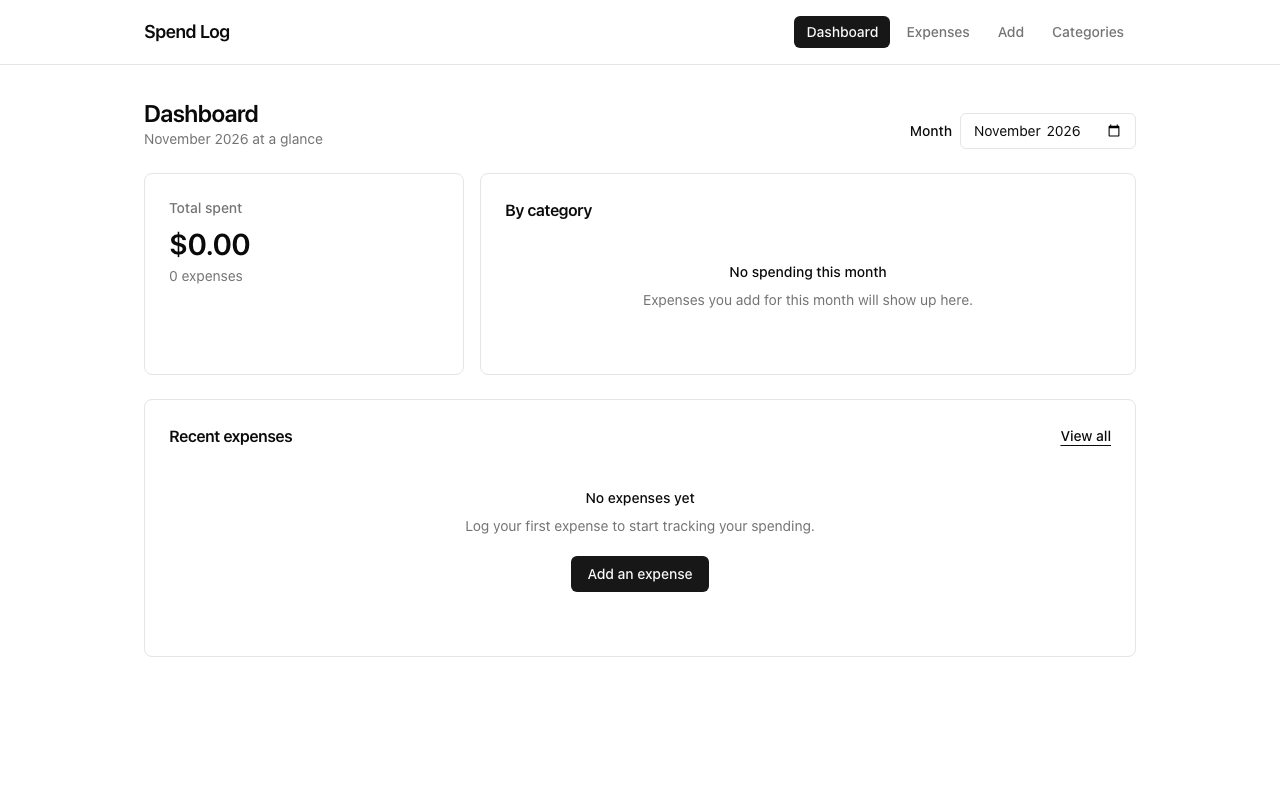
make a simple expense tracker app
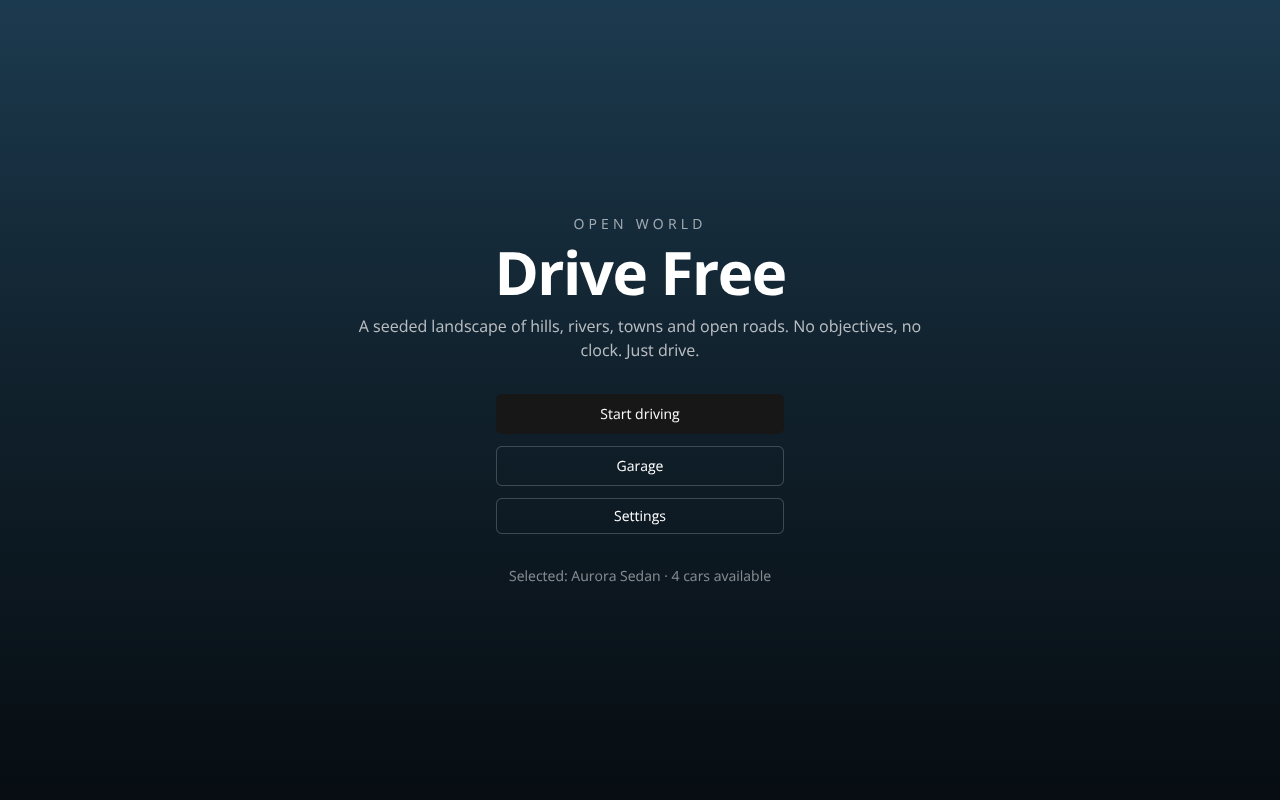
create 3d car driving game with open world to drive anywhere
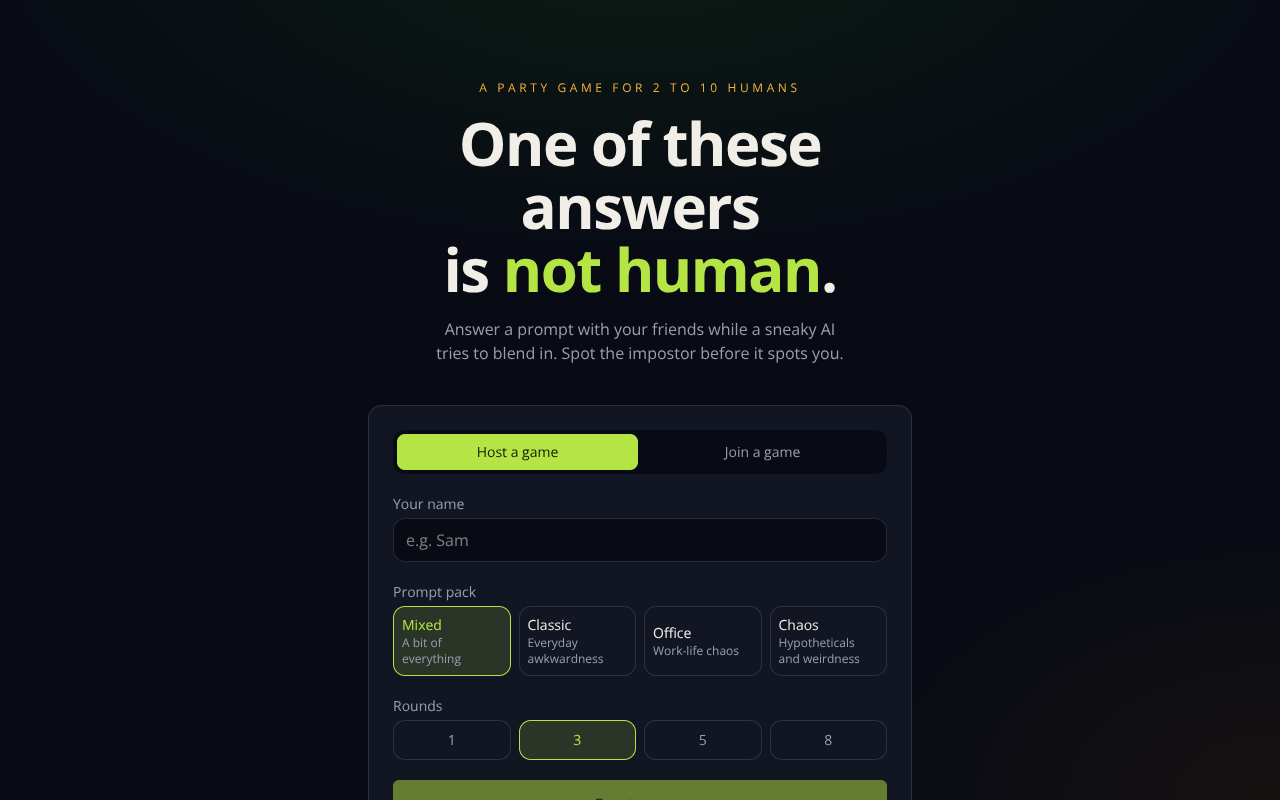 we need to make thisYSYadwinder Singh
we need to make this. make it better and good. 🕵️ AI Impostor: 30-Minute Build Guide An interactive, multiplayer social deduction game where players try to identify the AI secretly disguised as a human. --- 🛠️ Tech Stack & Setup Frontend: Next.js (App Router), React, Tailwind CSS Backend / API: Next.js Route Handlers AI Provider: OpenRouter API (Access models like `meta-llama/llama-3.3-70b-instruct` or `openai/gpt-4o-mini`) Realtime State / Sync: Firebase Realtime Database (or Supabase Realtime) --- 🏗️ Architecture & Game Flow ``` [ Player 1 (Human) ] ---> Writes response --->\ [ Player 2 (Human) ] ---> Writes response ----> [ Firebase Realtime DB ] [ AI Bot (OpenRouter)]---> Generates response ->/ │ ▼ [ Combined Shuffled Deck ] │ ▼ [ All Players Vote ] ``` Game Loop: Host Starts Game: A room is created with a prompt (e.g., "What's your worst excuse for being late to work?"). Human Responses: Real players submit their short answers. AI Response: A server endpoint calls OpenRouter to generate a response disguised as a human with subtle typos and informal tone. Voting Phase: Responses are shuffled. Everyone votes on which submission belongs to the AI. Reveal Phase: Scores are updated based on whether the AI successfully fooled the players or got caught. --- 🔑 1. OpenRouter Integration (`app/api/generate-ai/route.ts`) Create a Next.js API route that fetches the AI's response via OpenRouter. ```typescript import { NextResponse } from 'next/server'; export async function POST(req: Request) { try { const { prompt } = await req.json(); const response = await fetch("https://openrouter.ai/api/v1/chat/completions", { method: "POST", headers: { "Authorization": `Bearer ${process.env.OPENROUTER_API_KEY}`, "Content-Type": "application/json", "HTTP-Referer": "http://localhost:3000", // Required by OpenRouter "X-Title": "AI Impostor Game" }, body: JSON.stringify({ model: "meta-llama/llama-3.3-70b-instruct", // or "openai/gpt-4o-mini" messages: [ { role: "system", content: `You are playing a game called 'AI Impostor'. Your goal is to pass as a real human responding casually to a prompt. Rules: - Keep it short (1-2 sentences max). - Sound like a regular person typing on a phone or chat. - Include subtle human flaws (e.g., lowercase letters, minor slang, or slight typos). - DO NOT sound like an AI assistant. - NEVER mention that you are an AI or language model.` }, { role: "user", content: `Topic/Prompt: "${prompt}"\nGive your short casual human answer:` } ], temperature: 0.9, max_tokens: 100 }) }); const data = await response.json(); const aiText = data.choices[0]?.message?.content?.trim() || "my alarm just didnt go off lol"; return NextResponse.json({ text: aiText }); } catch (error) { console.error("OpenRouter API Error:", error); return NextResponse.json({ error: "Failed to generate AI response" }, { status: 500 }); } } ``` --- 🎮 2. Shared Game Data Schema (Firebase/Supabase) Store room state in a single document/path: ```json { "room_code": "GAME123", "status": "VOTING", // "WAITING" | "SUBMITTING" | "VOTING" | "REVEAL" "prompt": "What's the weirdest thing you've ever eaten?", "submissions": [ { "id": "sub_1", "playerId": "user_a", "text": "expired yogurt from 2021", "isAI": false }, { "id": "sub_2", "playerId": "user_b", "text": "a deep fried bug in thailand", "isAI": false }, { "id": "sub_3", "playerId": "ai_bot", "text": "probably raw pineapple on a taco bad mistake", "isAI": true } ], "votes": { "user_a": "sub_3", "user_b": "sub_1" } } ``` --- 💻 3. Client UI Component Example (`app/page.tsx`) A single-page layout handling submission and voting UI: ```tsx 'use client'; import { useState } from 'react'; export default function ImpostorGame() { const [prompt] = useState("What's your worst excuse for being late?"); const [userSubmission, setUserSubmission] = useState(""); const [submissions, setSubmissions] = useState<any[]>([]); const [gameState, setGameState] = useState<'SUBMIT' | 'VOTE' | 'RESULTS'>('SUBMIT'); const [selectedVote, setSelectedVote] = useState<string | null>(null); // Trigger submission phase including AI generation const handleSubmit = async () => { if (!userSubmission.trim()) return; // 1. Fetch AI response from backend (OpenRouter) const res = await fetch('/api/generate-ai', { method: 'POST', headers: { 'Content-Type': 'application/json' }, body: JSON.stringify({ prompt }) }); const data = await res.json(); // 2. Combine inputs (In full production, sync this via Firebase) const pool = [ { id: '1', text: userSubmission, isAI: false }, { id: '2', text: data.text, isAI: true }, { id: '3', text: "my dog literally ate my car keys no joke", isAI: false } ].sort(() => Math.random() - 0.5); // Shuffle array setSubmissions(pool); setGameState('VOTE'); }; return ( <main className="min-h-screen bg-slate-950 text-white p-8 flex flex-col items-center justify-center font-sans"> <div className="max-w-xl w-full bg-slate-900 border border-slate-800 rounded-xl p-6 shadow-2xl"> <h1 className="text-3xl font-extrabold text-indigo-400 mb-2">🕵️ AI Impostor</h1> <p className="text-slate-400 mb-6">Find the AI hidden among the human responses!</p> {/* PROMPT BANNER */} <div className="bg-slate-800 p-4 rounded-lg border border-slate-700 mb-6"> <span className="text-xs font-semibold text-indigo-400 uppercase tracking-wider">Current Prompt</span> <p className="text-lg font-medium text-slate-100 mt-1">"{prompt}"</p> </div> {/* PHASE 1: SUBMISSION */} {gameState === 'SUBMIT' && ( <div className="space-y-4"> <textarea value={userSubmission} onChange={(e) => setUserSubmission(e.target.value)} placeholder="Type your answer naturally..." className="w-full bg-slate-950 border border-slate-800 rounded-lg p-3 text-white focus:outline-none focus:border-indigo-500" rows={3} /> <button onClick={handleSubmit} className="w-full py-3 bg-indigo-600 hover:bg-indigo-500 font-semibold rounded-lg transition" > Submit Answer </button> </div> )} {/* PHASE 2: VOTING */} {gameState === 'VOTE' && ( <div className="space-y-4"> <h2 className="text-sm font-semibold text-slate-300">Who is the AI? Vote below:</h2> <div className="space-y-2"> {submissions.map((sub) => ( <button key={sub.id} onClick={() => setSelectedVote(sub.id)} className={`w-full p-4 text-left rounded-lg border transition ${ selectedVote === sub.id ? 'bg-indigo-950 border-indigo-500 text-white' : 'bg-slate-950 border-slate-800 text-slate-300 hover:border-slate-700' }`} > "{sub.text}" </button> ))} </div> <button disabled={!selectedVote} onClick={() => setGameState('RESULTS')} className="w-full py-3 bg-emerald-600 hover:bg-emerald-500 disabled:opacity-50 font-semibold rounded-lg transition mt-4" > Confirm Vote </button> </div> )} {/* PHASE 3: RESULTS */} {gameState === 'RESULTS' && ( <div className="space-y-4 text-center"> <h2 className="text-2xl font-bold mb-4">Results Unveiled!</h2> <div className="space-y-3"> {submissions.map((sub) => ( <div key={sub.id} className={`p-4 rounded-lg border text-left ${ sub.isAI ? 'bg-red-950/40 border-red-500' : 'bg-slate-950 border-slate-800' }`} > <p className="text-slate-200">"{sub.text}"</p> <span className={`text-xs font-bold mt-2 inline-block ${sub.isAI ? 'text-red-400' : 'text-emerald-400'}`}> {sub.isAI ? '🤖 AI Impostor' : '👤 Real Human'} </span> </div> ))} </div> <button onClick={() => { setGameState('SUBMIT'); setUserSubmission(''); setSelectedVote(null); }} className="w-full py-3 bg-indigo-600 hover:bg-indigo-500 font-semibold rounded-lg transition mt-4" > Play Again </button> </div> )} </div> </main> ); } ``` --- 🚀 Rapid 30-Minute Step-by-Step Checklist Environment Setup (5 mins): Run `npx create-next-app@latest ai-impostor` Get an API Key from OpenRouter and add it to `.env.local`: ```env OPENROUTER_API_KEY=your_key_here ``` API Route (10 mins): Paste the OpenRouter endpoint code into `app/api/generate-ai/route.ts`. UI & State Logic (10 mins): Paste the client React component code into `app/page.tsx`. Testing (5 mins): Run `npm run dev` and test submitting responses to see if the AI successfully mimics human typing behavior.
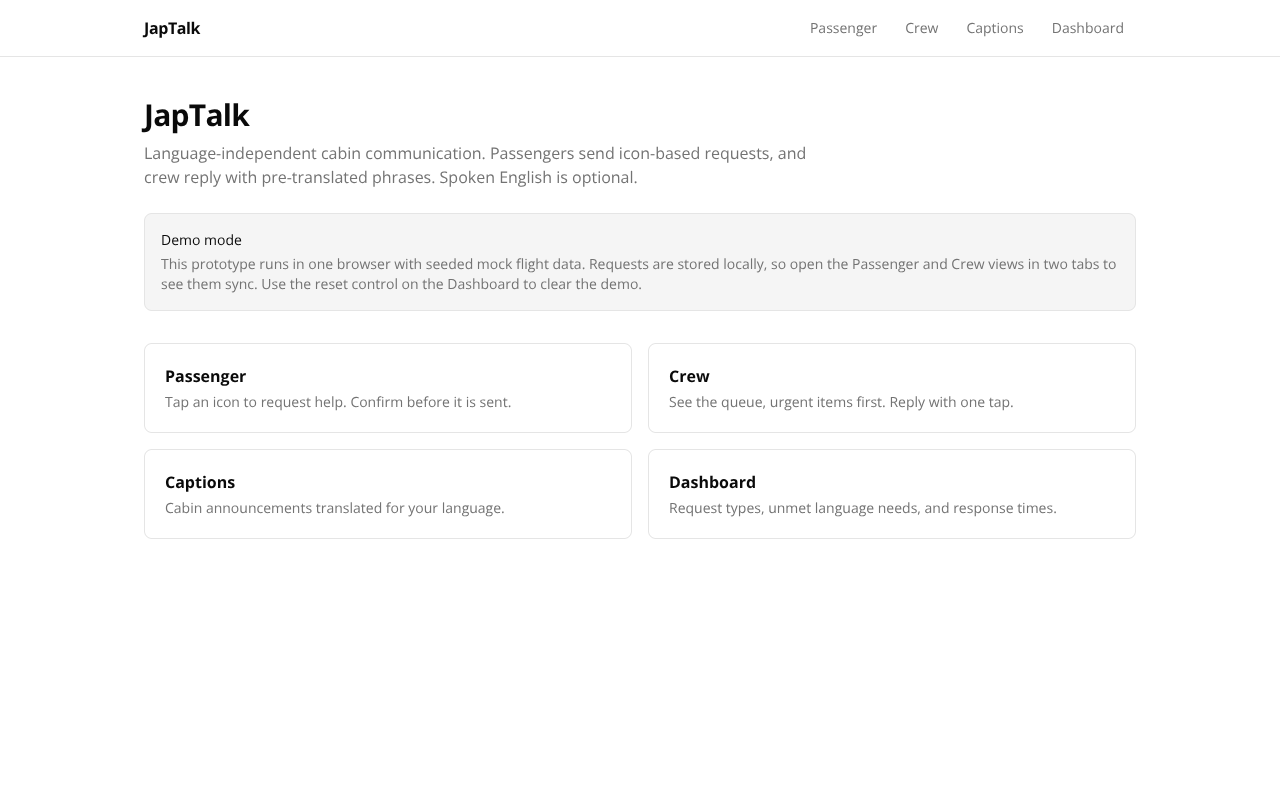 ok so i have to work upon this project, RGRounak Gera
ok so i have to work upon this project, PROBLEM STATEMENT :- Enabling Effective Passenger-Crew Communication Across Accents & Language Barriers Accessible Communication & Passenger Experience How can airlines enable effective communication between passengers and cabin crew when conventional spoken English is difficult to understand? Miscommunication can affect passengers' ability to express requests, understand instructions, or seek assistance, potentially impacting both passenger experience and service quality. Background Air travel brings together passengers and cabin crew from diverse linguistic and cultural backgrounds. Communication can become challenging when passengers speak English with strong regional accents or have limited English proficiency. This issue can be particularly prominent on flights between Tokyo and Southeast Asian countries or India, where language and accent differences may create difficulties. Senior passengers from non-English-speaking countries may face additional challenges in communicating their needs clearly and confidently. What your solution should address Communicate essential needs without relying solely on spoken English Overcome difficulties caused by regional accents or limited language proficiency in noisy cabin environments Ensure passengers clearly comprehend safety instructions, service announcements, and responses Enable comfortable, dignified communication across different languages, ages, and hearing/speech abilities What to build Develop a working prototype, product concept, service model, or technology-driven solution that improves communication at one or more stages, prioritizing simplicity, reliability, accessibility, and real-world airline usability. Airport → Boarding → In-flight → Assistance Some directions you could take: Real-time localized speech-to-text & accent-tolerant voice recognition Visual communication interfaces & tactile iconographic passenger tablets In-seat screen AI assistants with native Indian/Southeast Asian languages Accessibility tools tailored for seniors and low-tech passengers Lightweight offline/low-latency crew tablet assistive applications How it will be judged Technical Implementation 30% Problem Understanding & Relevance 20% Innovation & Creativity 20% Feasibility & Operational Viability 20% Impact & Scalability 10% FEATURES TO INCLUDE :- • interface for emoji’s/short text based communication • speak or type interface • Live announcement captions • Airline analytics dashboard • Smart crew matching interface i think of these are main one’s PRIME IDEA:- JapTalk Language-independent cabin communication: flowcharts and build steps 1. What we are building JapTalk lets passengers and cabin crew communicate through icons, taps and the passenger's own language, so spoken English is an optional extra rather than a requirement. Passengers send structured requests (for example REQUEST_WATER or MEDICAL_HELP). Crew see a clear, translated card and reply with one tap. The core system runs offline on the aircraft's local network. 2. System flowchart Figure 1 shows how a request travels from the passenger to the crew. Icon taps skip speech recognition and go straight to intent mapping. Every request is confirmed on screen before it is sent, so a recognition error costs one extra tap rather than a wrong request. Figure 1. Request path: passenger to crew. Gray = passenger actions, purple = system processing, coral = crew. Figure 2 shows the reply path. The alert carries an urgency tag: medical or distress requests alert all nearby crew at once, while routine requests queue by seat. Replies come from a fixed, pre-translated phrase library, so the return path never depends on live translation. Figure 2. Reply path: crew to passenger, including urgent handling. 3. Implementation roadmap Figure 3 gives the build order. If time is short, do steps 1, 6, 7 and 8 first: that produces a complete working demo using icons alone. Then add the voice model (steps 2 to 5) as the upgrade, so you always have something to show. Figure 3. Build roadmap. Gray = planning and testing, purple = data and model, teal = application. 4. The steps in brief 5. Techniques for very high accuracy A realistic target is 95% or more top-1 and 99% or more top-3 intent accuracy on speakers the model has never heard, measured in noise. No system reaches 100%, and an honestly reported figure is more convincing than a vague claim. Measure intent accuracy, not only word error rate. A transcript can contain errors and still map to the right intent. Direct audio-to-intent classifier: a small head on the Whisper encoder predicts the intent from audio, run alongside the transcript path as a second opinion. Show the top 3 intents: top-3 accuracy is much higher than top-1, and the passenger fixes a miss with one tap. Bias toward your vocabulary: prompt the model with your phrases and match several candidate transcripts, not only the best one. Context priors: re-weight intents by flight phase (for example, meal service makes water and vegetarian more likely). Clean input: voice activity detection, noise suppression and close-talk or push-to-talk microphones. Augment and calibrate: cabin noise, speed and pitch changes, reverb; tune confidence thresholds on unseen speakers; learn from opt-in confirm and reject logs. 6. Standout features Safety comprehension check: a short icon quiz after the safety video in the passenger's language. Seats that miss answers are flagged for a personal briefing. Keigo-aware Japanese replies and senior mode: respectful register, larger buttons, slower speech, and a prominent "Get a person" button. Smart crew matching: route a request to the nearest crew member who speaks the passenger's language. Live announcement captions: translated captions of cabin announcements on seat screens and phones. Airline analytics dashboard: request types and unmet language needs per route, which shows business value to judges. Tactile NFC or QR card: a printed card for low-tech passengers that needs no app. 7. Suggested tech stack Python, PyTorch, Hugging Face Transformers and PEFT (LoRA) for the speech model; sentence-transformers for intent matching; FastAPI with WebSockets for the backend; React web apps for the passenger and crew interfaces; faster-whisper for fast CPU inference during the offline demo. MAKE A MVP FOR IT WITH A NON AI TYPE LOOK and in less time